If you want to build a hydrogen therapy machine business for B2B buyers, the real job is not “selling a machine.” It is choosing the right market, building a compliant offer, creating proof, and setting up repeatable channels that help clinics, distributors, and wellness operators buy with confidence.
Answer
To start a hydrogen therapy machine business, I’d focus on six things: pick a clear B2B niche, define your claims carefully, choose a reliable supply or manufacturing model, build clinical and commercial proof, create a dealer or direct-sales system, and support buyers with training, service, and compliance. In B2B, growth usually comes from trust, outcomes, and repeatable distribution, not from flashy product pages alone.
Read On
That’s the short version. But the useful version is a lot more practical.
Because if you treat this like a simple product launch, you’ll burn cash fast. If you treat it like a market-development business, you give yourself a much better shot at building something that lasts.
What Starting This Business Really Means
When people say they want to start a hydrogen therapy machine business, what they often mean is, “How do I find a product, make a website, and get customers?”
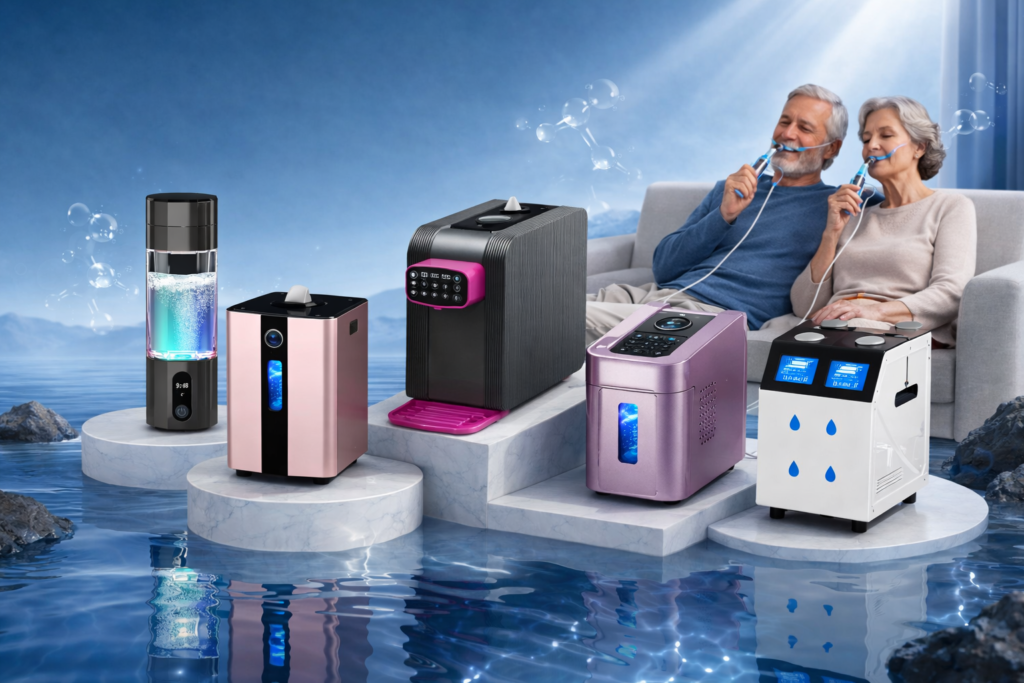
That’s not enough in B2B.
In this space, buyers are usually clinics, wellness centers, recovery studios, distributors, or health-focused retailers. They are not just buying a box with buttons. They are buying risk reduction, margins, credibility, training, service support, and a story they can confidently pass to their own customers.
So the first shift I’d make is this:
Don’t build a machine business. Build a business system around a machine.
That means your offer has to answer questions like:
- Who is this for?
- What problem does it solve in a business setting?
- How will the buyer make money with it?
- What claims can they safely make?
- Who handles installation, maintenance, and training?
- What happens when the machine breaks on a Monday morning?
Those are the questions that close B2B deals.
And they matter even more in health-adjacent categories, where buyers tend to be cautious, committee-driven, and allergic to hype. Gartner notes that B2B buying groups are often complex and conflict-heavy, which is a polite way of saying: one enthusiastic contact rarely closes the deal alone.
Pick a B2B Market Before You Pick a Sales Pitch
This is where a lot of people go sideways.
They try to sell to “everyone interested in health.” That sounds big. It’s also a great way to become forgettable.
I’d choose one primary market first, then build the business around that buyer.
For example:
Clinics and integrative practices
These buyers care about credibility, patient experience, safety, documentation, and ongoing support. They may want stronger evidence, clearer SOPs, and polished onboarding materials.
Wellness spas and recovery studios
These buyers care more about member experience, differentiation, and revenue per visit. They want something easy to operate, visually appealing, and simple to package into sessions or memberships.
National or regional distributors
These buyers are not looking for one machine. They are looking for margin, territory logic, reliable supply, low defect rates, and sales enablement they can roll out at scale.
Private-label partners
These buyers want branding control, packaging, documentation, and a supplier who won’t create chaos six months later.
Each one needs a different message, different pricing model, and different support system.
So before I worried about SEO or ads, I’d answer this question:
Who is my first 25 ideal B2B buyers, and why would they switch from doing nothing?
That one question clears up a shocking number of bad business ideas.
Get the Compliance and Claims Piece Right Early
This part is not glamorous. It is also the part that can save your business.
If your hydrogen therapy machine is marketed with health-related claims, you need to be extremely careful about how you position it. In the U.S., the FTC says health-related advertising claims must be truthful, not misleading, and backed by appropriate scientific substantiation. The FDA also distinguishes between low-risk general wellness positioning and claims that can push a product into medical-device territory. In the EU, whether something is regulated as a medical device depends heavily on intended purpose under the MDR.
In plain English:
Your marketing language can change your regulatory exposure.
That means you should decide early whether you are building a:
- wellness-oriented business,
- medical or clinical business,
- or hybrid business with separate channels and messaging.
I would not let sales copywriters improvise here. I’d create a claims framework that covers:
- approved phrases,
- restricted phrases,
- required disclaimers,
- supporting evidence,
- and channel-specific usage rules.
That framework should be used by your sales team, dealers, affiliates, and distributors too. Because if they overclaim, you can still end up with the headache.
This is one of those areas where boring is beautiful.
Choose the Right Business Model

There isn’t just one way to enter this market.
I see four practical models:
1. Distributor model
You source or manufacture machines, then sell through distributors or resellers. This is attractive if you want scale without building a giant direct sales team.
The tradeoff is lower control over the final sale.
2. Direct-to-business model
You sell straight to clinics, spas, and studios yourself. This gives you tighter feedback, stronger margins, and better control over positioning.
The downside is that you need real sales capability.
3. Hybrid model
You close strategic accounts directly and use distributors for geography or vertical expansion. This is often the most sensible route once you have traction.
4. Private-label/OEM model
You manufacture or source the device and let partners sell it under their own brand. This can work well if your strength is operations and supply chain, not brand-building.
For most new entrants, I’d start with either direct-to-business or a carefully selected hybrid model.
Why?
Because early on, you need direct market feedback. You need to hear objections with your own ears. You need to learn what buyers actually care about, not what you guessed from a spreadsheet at 11:40 p.m.
Your Offer Needs More Than a Machine
Here’s the thing B2B buyers care about most:

Can I use this profitably and safely without creating a mess for my team?
That means your offer should include more than hardware.
A strong B2B package usually includes:
- the machine itself,
- onboarding and staff training,
- cleaning and maintenance SOPs,
- marketing collateral for the buyer,
- usage protocols,
- warranty and service response times,
- replacement parts flow,
- and a clear ROI story.
You are not just selling equipment. You are selling implementation.
One of the smartest ways to stand out is to make adoption ridiculously easy.
If I were building this business, I’d create three ready-made commercial packages:
| Package | Best For | Core Offer |
|---|---|---|
| Starter | Single-location wellness operators | 1 machine, training, launch kit, scripts |
| Growth | Multi-room clinics or studios | multiple units, priority support, team training |
| Partner | distributors and resellers | bulk pricing, co-marketing, sales assets, territory plan |
That does two useful things.
First, it simplifies buying.
Second, it moves the conversation away from “What’s your price?” and toward “Which growth model fits me?”
That’s a much healthier conversation.
Build Proof Before You Chase Scale
B2B buyers want confidence. Especially in health-adjacent equipment.
So before trying to scale hard, I’d build proof in four layers.
Commercial proof
Can the buyer make money with it?
Show sample packages, utilization assumptions, average session pricing, or upsell paths. Not fantasy math. Real math.
Operational proof
Can their team run it without drama?
Create setup guides, daily use checklists, staff scripts, and troubleshooting docs.
Social proof
Can they see that businesses like theirs already use it?
Case studies, testimonials, launch stories, and short interviews help a lot here.
Evidence proof
Can you back your positioning responsibly?
This does not mean making wild claims based on one tiny study and a prayer. It means using careful language, citing evidence responsibly, and staying inside the lines set by the relevant regulators and advertising rules.
If you do this well, your sales process gets easier because you’re reducing uncertainty instead of adding noise.
How I’d Actually Expand the Business
This is the part most people really mean when they ask the question.
Not “How do I start?” but “How do I grow this into something real?”
Here’s the expansion playbook I’d use.
Start with one wedge
Pick one buyer segment, one geography, and one core use case.
Example: recovery studios in one country, or integrative clinics in one metro region.
That focus lets you sharpen your messaging fast.
Create a repeatable sales narrative
Your team should be able to explain, in plain English:
- who the product is for,
- what problem it helps solve commercially,
- how it fits into the buyer’s business model,
- what makes adoption easy,
- and why your company is lower-risk than alternatives.
In B2B, clarity beats cleverness almost every time.
Use content for demand generation
Since you asked for an SEO-friendly angle, this matters.
I would build content around the buyer’s actual questions, such as:
- hydrogen therapy machine for wellness clinics
- hydrogen inhalation machine business model
- hydrogen therapy machine distributor opportunity
- how wellness centers can add hydrogen therapy
- hydrogen therapy machine ROI for clinics
That kind of content attracts buyers earlier in the research cycle.
And instead of writing thin product pages, I’d publish assets like buyer guides, compliance checklists, onboarding articles, and case studies. That gives your brand authority and helps the sales team close deals later.
Build channel partners carefully
A bad distributor can waste a year.
I’d look for partners with:
- existing relationships in your vertical,
- service capability,
- realistic sales expectations,
- and willingness to follow your claims rules.
Then I’d equip them with templates, demo scripts, objection handling, and lead follow-up sequences.
Protect the post-sale experience
This part is huge.
A lot of equipment businesses are good at getting the order and weirdly bad at everything after that. Which is unfortunate, because referrals, reorders, and multi-location rollouts usually come after implementation.
So I’d obsess over:
- response times,
- training completion,
- customer success check-ins,
- usage rates,
- and service ticket patterns.
That’s how you turn one machine into ten.
The Biggest Mistakes I’d Avoid
Let me save you from a few expensive detours.
Mistake 1: leading with technical specs
Most buyers do not wake up dreaming about flow rates and engineering diagrams.
Specs matter. But outcomes, ease of use, support, and business fit matter first.
Mistake 2: making aggressive health claims
This is where enthusiasm can become liability.
Your ads, brochures, dealer decks, and landing pages all need discipline. FTC guidance is very clear that health claims require adequate substantiation, and the FDA’s framework around general wellness versus medical claims matters a lot in how products are positioned.
Mistake 3: trying to sell every vertical at once
Focus beats breadth early.
Mistake 4: ignoring service infrastructure
A fancy machine with weak support is just a future complaint.
Mistake 5: copying supplement-style marketing into a B2B channel
That tone often kills credibility with serious buyers.
My Bottom Line
If I were starting a hydrogen therapy machine business today, I would not think like a gadget seller.
I’d think like a category builder.
I’d choose one B2B niche, define safe positioning, create a low-friction commercial offer, prove the business case with early customers, and then expand through content, systems, and selective channel partners.
That’s how you move beyond “selling products.”
You build a business buyers can trust, operators can run, and partners can scale.
And in B2B, that’s where the real money usually lives.