I wrote this Ultimate Guide To Importing Hydrogen Machine From China because too many buyers get fooled by good-looking machines, low quotes, and polished sales talk. And when hydrogen equipment fails, it’s not just annoying. It can hurt product performance, margins, and safety.
To import a hydrogen machine from China successfully, focus on the electrolysis system, safety design, real operating stability, manufacturer experience, contract protection, and after-sales support, not just price or appearance. The best supplier is the one that can prove materials, performance, and accountability.
Most buyers think importing is about comparing prices. It’s not. It’s really about spotting the difference between a machine that works on day one and a machine that still works a year later.
Why Most Buyers Fail When Importing Hydrogen Machines
If you’ve sourced products from China before, you already know the pattern.
Two suppliers show you products that look nearly identical. The photos are clean. The specifications look close enough. The cheaper one seems like the smarter deal.
Then six months later, the “smart deal” turns into a mess.
That happens a lot with hydrogen machines because buyers often judge them like consumer electronics: look at the shell, compare a few numbers, ask for the price, and pick the supplier that sounds the most confident.
That approach fails here.
The Biggest Misconception: “Machines Look Similar, So Quality Is Similar”

This is probably the most expensive mistake in the whole buying process.
A hydrogen machine can look beautiful from the outside and still be weak where it matters most. The housing, screen, buttons, and packaging tell you almost nothing about the quality of the core system.
In hydrogen equipment, the internal electrolysis setup is everything.
And that’s where suppliers can cut cost quietly:
- lower-grade membranes
- reduced precious metal loading
- cheaper catalysts
- poor gas-water separation design
- weaker safety protection
- unstable assembly quality
To a buyer, two machines may appear almost identical.
In real use, they can perform like two completely different products.
One runs smoothly, stays stable, doesn’t overheat, doesn’t spray water, and keeps output consistent. The other starts strong, then loses purity, gets hot, produces moisture, or fails prematurely.
That’s why appearance should be one of the last things you evaluate, not the first.
The Hidden Gap Between Price and Real Value

Low price is seductive because it feels measurable.
Real value is harder to see.
And that’s exactly why buyers get trapped.
A cheaper supplier may save you money upfront, but cost you more later through:
- shorter equipment lifespan
- unstable performance
- replacement parts
- delayed customer support
- more returns or complaints in your market
- downtime and lost sales
I always tell people this: in industrial or semi-technical products, the purchase price is only one line on the bill. The real bill arrives later.
Why Hydrogen Equipment Is NOT a “Standard Product”
A lot of products are relatively standardized. You can compare dimensions, materials, and compliance docs, and you’ll get a decent sense of quality.
Hydrogen equipment doesn’t work that way.
This category is highly dependent on design details, materials, assembly discipline, and how honest the supplier is about internal components. Even small changes in membrane quality, catalyst loading, sealing structure, or water-gas separation can create huge differences in stability and safety.
So if you treat hydrogen machines like a standard off-the-shelf product, you’re already behind.
The Core of Everything — Understanding the Electrolysis Syste
If there’s one thing I want readers to remember from this entire guide, it’s this:
The core of a hydrogen machine is the electrolysis cell.
Everything else matters too, of course. But if the electrolysis system is weak, no amount of nice design or fancy marketing can save the machine.
What Is the Electrolysis Cell (And Why It Matters Most)
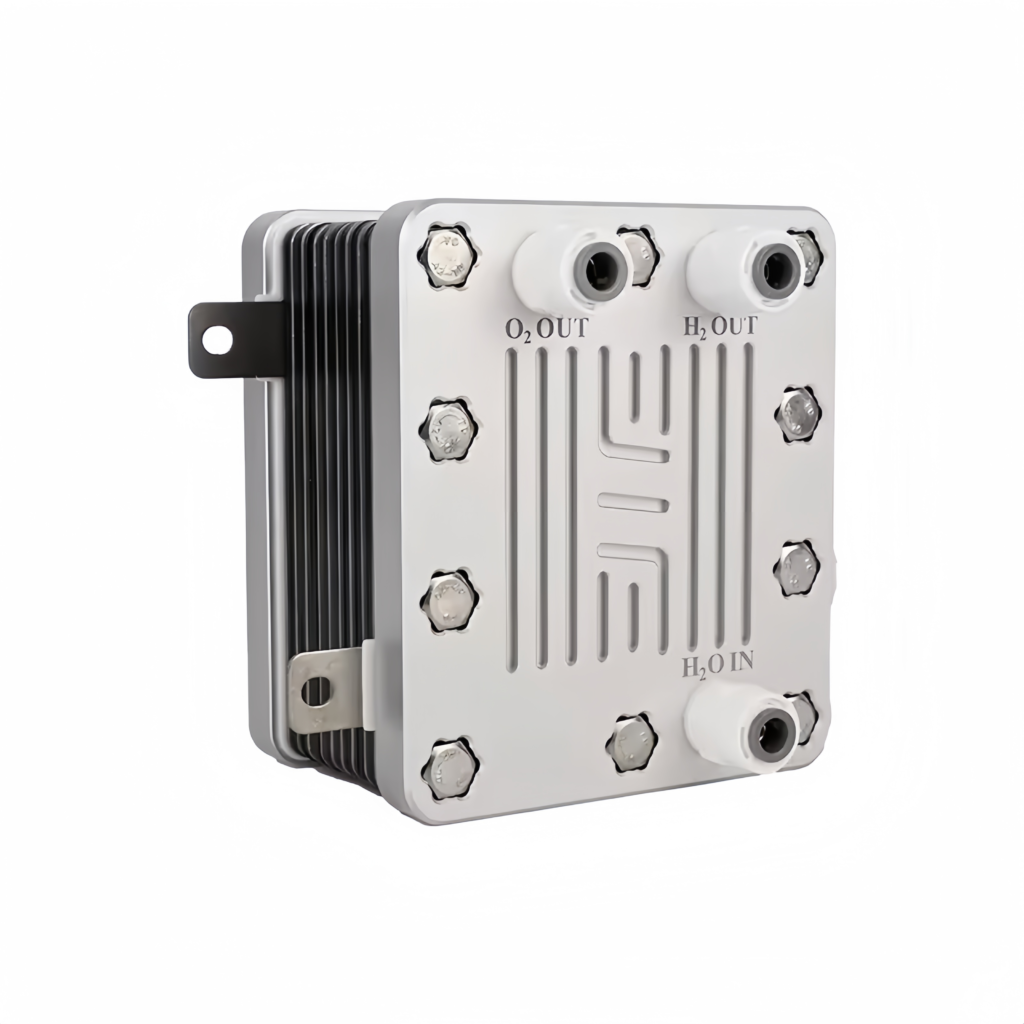
The electrolysis cell is the part that actually generates hydrogen.
So when buyers ask, “What should I focus on most?” this is my answer every single time.
The electrolysis cell affects:
- hydrogen purity
- output efficiency
- temperature behavior
- operating stability
- water control
- durability
- safety risk
- replacement frequency
A supplier can promise almost anything in a PDF.
But the electrolysis cell is where the truth lives.
That’s why experienced buyers don’t stop at “What’s your flow rate?” They ask deeper questions like:
- What membrane are you using?
- Is it imported or domestic?
- What catalyst materials are used?
- What’s the precious metal loading?
- What’s the service life in hours?
- How does the system behave under continuous operation?
Those questions separate serious manufacturers from sales teams reading a script.
PEM vs Alkaline Electrolysis: The Real Difference
Most hydrogen machines in this space will involve either PEM or alkaline electrolysis.
On paper, both can produce hydrogen.
In practice, they serve different quality levels and use cases.
PEM electrolysis is generally known for faster response, cleaner operation, compact structure, and better control. It’s often the preferred route when users care about stable output, high purity, and consistent day-to-day performance.
Alkaline electrolysis can be cheaper, but it may be bulkier and more sensitive to design quality, maintenance approach, and system execution.
The key point isn’t “one is always good and one is always bad.”
The key point is this: whatever technology the supplier uses, you need to understand whether they’ve executed it well.
A poorly built PEM system is still a poor machine.
A buyer who only hears “PEM” and assumes top quality is making the same mistake as the buyer who only hears “cheap price” and assumes good value.
Why Imported Membranes (Nafion) Are a Game-Changer
One of the strongest product insights in this market is membrane quality.
And in many cases, imported membranes are a major differentiator.
A high-quality imported membrane, such as Nafion, usually brings better consistency, better chemical stability, and more reliable long-term operation than lower-grade alternatives. Good membranes help the machine run steadily, with less heat buildup, less moisture carryover, and fewer erratic output issues.
In plain English: a better membrane usually means a more stable machine.
This matters because unstable machines often show the same symptoms:
- they run hot
- they spray water
- they lose consistency during longer sessions
- they become unreliable under daily use
That’s why membrane sourcing should never be treated like a minor detail. It’s one of the first things I’d verify with any supplier.
The Role of Precious Metals (Iridium & Platinum)
This is another area where some suppliers quietly save money.
High-quality electrolysis cells often use precious metals such as iridium and platinum in critical parts of the system. These materials help support performance, durability, and electrochemical efficiency.
And yes, they’re expensive.
Which is exactly why some factories reduce the loading, downgrade the materials, or avoid the topic entirely.
That’s not just a technical issue. It’s a purchasing risk.
If a supplier claims premium performance but avoids specific answers about catalyst materials, that should make you pause.
Because in hydrogen equipment, cost-cutting inside the cell usually shows up later as weak performance, shorter life, or inconsistent output.
How to Identify Low-Quality Electrolysis Systems (Red Flags)

Here are the red flags I’d watch for immediately:
Red flag #1: Vague answers about the membrane
If a supplier cannot clearly tell you what membrane they use, where it comes from, and why they chose it, that’s a problem.
Red flag #2: No transparency on internal materials
A serious manufacturer can explain core materials. A weak one will keep redirecting you to exterior features.
Red flag #3: Overemphasis on appearance
If the pitch is all screen, housing, and packaging, but almost nothing about the cell, you’re probably talking to the wrong supplier.
Red flag #4: No continuous-operation data
Lots of machines look fine in a short demo. Real quality shows up during longer operation.
Red flag #5: Very low pricing with “premium” claims
You can’t have top membranes, proper precious metal use, strong safety systems, and excellent after-sales support at bargain-basement pricing. Something is being cut.
Real Performance Indicators (What Actually Matters in Use)
A hydrogen machine should not just work in a brochure. It should work in real life.
That means performance needs to be judged by what happens during actual operation, not just what looks impressive in a sales sheet.
Hydrogen Purity — What Level Is Acceptable?
Purity matters because it directly affects the usefulness and consistency of the machine.
A supplier should be able to explain the target hydrogen purity, how it’s measured, and how it stays stable over time. I’d be cautious with any supplier that only gives you a single purity number with no testing method behind it.
The important question is not just, “What purity can you hit?” It’s also, “How stable is that purity during ongoing use?”
Because a machine that starts well but drifts during real operation is not a reliable machine.
Output Stability — Why “Stable Gas Curve” Matters
This is one of those things buyers ignore until they’ve already made a mistake.
Stable hydrogen production is more important than flashy peak output.
A good machine should produce a smooth, predictable gas curve over time. That means the output shouldn’t swing wildly, fade too quickly, or become erratic as temperature rises.
When output is stable, the machine feels controlled and trustworthy.
When output is unstable, that usually points back to the core system: membrane quality, cell design, thermal management, or overall manufacturing discipline.
Why Good Machines Don’t Overheat or Spray Water
This is a huge practical clue.
A well-built machine should operate stably. It should not become excessively hot during normal use. It should not spray water. It should not behave like it’s barely holding itself together.
When a hydrogen machine overheats or throws water into the gas path, that usually signals one or more deeper issues:
- weak membrane performance
- poor thermal management
- bad gas-water separation
- unstable pressure handling
- low-grade internal design
This is exactly why your insight matters so much: better imported membranes support more stable work, with less heat and less water spray.
That’s not a cosmetic improvement. That’s a core performance advantage.
Continuous Operation Testing vs Lab Data

I love lab data. But I trust real-use testing more.
A lot of suppliers can produce attractive test numbers under controlled conditions. The better question is: what happens when the machine runs continuously?
Ask for testing under sustained operating conditions.
Look for:
- temperature behavior over time
- output consistency over time
- signs of moisture carryover
- shutdown events
- pressure stability
- repeatability across multiple units
A machine that performs well for ten minutes is not necessarily a machine you want to import in volume.
Safety — The Most Overlooked Risk
A surprising number of buyers treat safety like a checkbox.
That is a bad idea with any hydrogen-related equipment.
Why Hydrogen Equipment Safety Is Critical

Hydrogen is not the kind of product category where you can forgive sloppy engineering.
Even if you’re not buying huge industrial systems, you’re still dealing with gas generation, pressure, heat, electrical components, and moisture management. That means safety design has to be taken seriously from day one.
A supplier that shrugs off safety details is telling you something important about how they think.
And it’s not something you want to learn after the goods arrive.
Essential Safety Systems You Must Verify
At minimum, I would verify the following:
- Overpressure protection
The machine should be designed to prevent unsafe pressure buildup and respond properly when pressure goes beyond the acceptable range. - Temperature control
A good system monitors heat and prevents dangerous thermal drift. - Anti-backflow / anti-flashback
This helps stop reverse movement of gas or ignition-related risk where applicable. - Gas leakage detection
The system should include practical safeguards to reduce leakage risk and improve operating safety.
If the supplier cannot explain these systems clearly, don’t move forward until they can.
Gas-Water Separation System (Critical but Often Ignored)
This one gets ignored far too often.
Buyers focus on the hydrogen number and forget about the gas-water separation design. But this part is crucial because poor separation can lead to wet gas, unstable delivery, visible water spray, and reduced operating quality.
And once again, that points to a bigger truth:
In hydrogen machines, the annoying symptom is often just the visible tip of a deeper engineering problem.
So yes, I’d inspect the gas-water separation setup very carefully.
How to Tell If a Manufacturer Takes Safety Seriously
Here’s my simple test.
A manufacturer that takes safety seriously will usually do three things:
First, they explain safety systems in detail without getting defensive.
Second, they document testing, controls, and design logic clearly.
Third, they don’t act like safety questions are inconvenient.
A weak manufacturer often does the opposite. They rush back to price, cosmetics, or “many customers already buy this.”
That’s not reassuring. That’s avoidance.
The Real Cost — Initial Price vs Lifetime Cost
This is where cheap suppliers lose their shine.
Why Cheap Machines Are Expensive in the Long Run
A low quote is easy to celebrate.
Until the machine starts failing early, producing unstable output, creating support headaches, or needing core replacements much sooner than expected.
That’s when buyers realize they didn’t buy cheap. They bought fragile.
And fragile equipment is expensive.
Equipment Lifespan (Hours): What You Should Expect
Any supplier worth taking seriously should be able to discuss expected lifespan in hours, under what operating conditions that estimate applies, and which parts are most likely to degrade first.
I’d be especially careful with suppliers who give dramatic lifespan claims but can’t connect them to membrane quality, catalyst quality, cooling behavior, or service records.
Long life isn’t just a number. It’s the result of good materials and disciplined production.
Consumables and Replacement Costs (Hidden Profit Killer)
This is one of the biggest hidden traps.
Even if the initial unit price looks reasonable, the long-term economics can fall apart if replacement parts or consumables are frequent, expensive, or hard to source.
Ask early:
- Which parts are consumable?
- What is the replacement cycle?
- What does each replacement cost?
- Can replacement parts be stocked locally?
- What happens if the core cell needs replacement?
Those answers affect your margin more than many buyers realize.
Maintenance Cycle and Downtime Risk
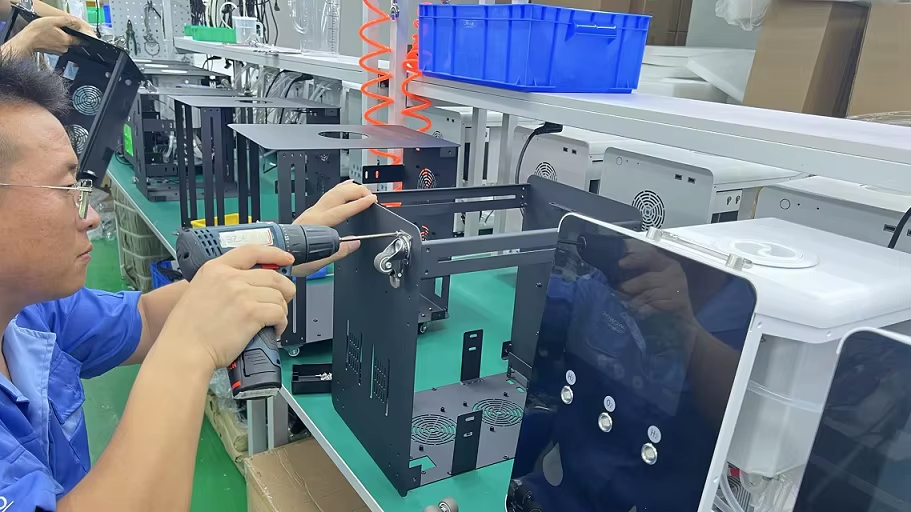
A machine that requires frequent maintenance doesn’t just cost money. It interrupts business.
That means downtime risk needs to be part of your evaluation.
The real question is not, “Can this machine be repaired?”
It’s, “How often will I need to repair it, how fast can that happen, and who will support me when it does?”
After-Sales Support — The Difference Between Profit and Loss
Your insight here is exactly right: you need a manufacturer with at least five years of experience, because that usually increases the chance of real after-sales service.
A factory that has survived and specialized for five or more years is more likely to have:
- a more mature production process
- technical troubleshooting experience
- replacement part support
- documentation
- actual service routines
- people who have seen failure patterns before
Newer suppliers may offer aggressive prices. But when problems come up, they often disappear into confusion.
And that’s when cheap becomes very expensive.
Understanding Total Cost of Ownership (TCO)
Total Cost of Ownership is simply the full cost of running the machine over time.
That includes:
- purchase price
- freight and customs
- certification cost
- maintenance
- spare parts
- downtime
- warranty claims
- support delays
- replacement cycle
This is the lens smart buyers use.
Not “What’s the cheapest quote?”
But “Which machine will still make sense financially after one to three years?”
How to Choose a Reliable Manufacturer in China
Finding a supplier is easy.
Finding a reliable hydrogen machine manufacturer is not.
Why 5+ Years of Experience Is a Must
If a factory has been making this category for at least five years, that doesn’t guarantee quality. But it does improve your odds.
Why?
Because they’ve had time to:
- refine the product
- fix recurring design flaws
- build service systems
- support repeat customers
- survive market pressure
And in technical products, surviving for years usually means they’ve already been tested by reality.
Factory vs Trading Company — How to Tell the Difference
There’s nothing automatically wrong with trading companies. But you need to know who you’re actually dealing with.
Ask directly:
- Are you the factory?
- Can I visit or video-audit the production line?
- Who handles engineering support?
- Who handles warranty?
- Can I speak with technical staff, not only sales staff?
A real factory can usually answer these confidently. A trading company may speak broadly, delay specifics, or struggle when technical questions get detailed.
Questions You MUST Ask Before Working With a Supplier
Here are the questions I would absolutely ask:
- What electrolysis technology do you use, and why?
- What membrane is used, and is it imported?
- What precious metals are used in the cell?
- What is the expected service life in hours?
- What safety systems are built in?
- What continuous-run testing have you done?
- What are the major consumables and replacement cycles?
- How do you handle after-sales support overseas?
- Can you provide proof of core material specifications?
- Will you sign a compensation agreement for material authenticity?
That last one matters a lot.
How to Evaluate Technical Capability (Not Just Sales Talk)
The easiest way to test technical capability is to push past surface answers.
A technically capable manufacturer can usually explain trade-offs, limitations, and design logic. They don’t just say, “No problem.” They can tell you why the machine works, how it was built, and what risks they’ve already addressed.
Sales language is smooth.
Technical capability is specific.
Know the difference.
Contracts and Risk Control (Most Buyers Skip This)

This section saves people real money.
Why You Must Use a Compensation Agreement
If the supplier claims they use imported membranes, premium materials, or a specific electrolysis configuration, that shouldn’t live only in email or WeChat chat history.
Put it in the agreement.
A compensation agreement forces clarity and creates accountability. It gives the supplier a financial reason to tell the truth before production starts.
How to Protect Yourself Against Fake Materials
This matters especially for core materials.
If a supplier says the electrolysis cell is imported, or uses imported membrane material, or contains specified precious metal components, require that those claims appear in the contract with supporting documentation and a penalty clause.
Because once the goods are shipped, proving substitution is harder and more expensive.
Example: 5x–10x Compensation Clause Explained
This is one of the strongest protective moves in your whole sourcing strategy.
If the supplier claims the machine uses an imported electrolysis cell, imported membrane, or other specified high-value core material, include a clause stating that if the delivered goods do not match that claim, the supplier must compensate you at 5x to 10x the affected value.
That sounds aggressive to some buyers.
It’s not.
It’s what serious risk control looks like when the cost of fraud is high and the internal material is difficult to verify from the outside.
Payment Terms and Risk Management
Don’t structure payment like you’re buying a commodity.
Use payment terms that protect you during key stages:
- deposit after technical confirmation
- balance tied to inspection or testing milestones
- written acceptance criteria
- documentation requirements before final payment
A payment plan should reward verified progress, not hopeful promises.
Certifications — What They Mean (And What They Don’t)
This is where buyers sometimes get overconfident.
Key Certifications for US, EU, Japan, Korea Markets
The exact certification path depends on how the product is classified in each market. If the hydrogen machine is marketed as medical electrical equipment or a medical device, regulatory and safety requirements become more serious. In the EU, CE marking for medical devices sits under the Medical Device Regulation. In Japan, device approval or certification runs through the PMDA framework. In Korea, import and manufacturing approvals involve MFDS requirements. For medical electrical safety, IEC 60601-series testing is a common benchmark used in many markets.
For US-bound products, buyers often talk about “FDA certification,” but that phrase gets used loosely. Depending on the product’s claims and classification, the relevant path may involve FDA device requirements, export documentation, recognized standards, and safety testing rather than a simple one-line certificate.
Why Certification Does NOT Guarantee Quality
This part is critical.
A certificate can tell you something about compliance scope. It does not automatically prove superior internal materials, strong durability, stable output, or honest sourcing.
Certification is useful.
It is not magic.
A certified product can still have a weak electrolysis cell, poor separation design, or disappointing service support.
How to Verify Certificates Properly
Don’t just ask, “Do you have certificates?”
Ask:
- Which certificate applies to which model?
- Who issued it?
- Does the issuing body look legitimate?
- Does the scope match the actual product?
- Is the certificate current?
- Does the product claim in your market trigger additional requirements?
In other words, verify relevance, not just existence.
Step-by-Step Import Process (Practical Guide)
Here’s the practical roadmap I’d use.
Step 1 — Define Product and Market Requirements
Clarify your target market, product positioning, regulatory claims, and acceptable performance level before you contact suppliers.
Step 2 — Supplier Shortlisting
Shortlist manufacturers with hydrogen-specific experience, preferably five years or more, and filter out anyone who can’t discuss the electrolysis system clearly.
Step 3 — Technical Evaluation
Review membrane source, cell structure, catalyst materials, safety systems, lifespan, and continuous-operation behavior.
Step 4 — Sample Testing
Do not skip testing. Run the sample long enough to evaluate heat, stability, water control, and consistency.
Step 5 — Negotiation and Contract
Lock in technical specs, compensation terms, material authenticity obligations, and inspection standards before mass production.
Step 6 — Production and Quality Control
Monitor production, inspect key stages, and confirm that what’s being built matches what was promised.
Step 7 — Shipping and Customs
Prepare shipping documents, labeling, and market-specific compliance paperwork before the goods leave China.
Section 11: Common Mistakes Buyers Make (And How to Avoid Them)
Choosing Based on Price Alone
This is the classic mistake. Price matters, but alone it tells you almost nothing about long-term value.
Ignoring Internal Components
If you don’t understand the membrane, electrolysis cell, and catalyst story, you’re not really evaluating the machine.
Skipping Technical Questions
When buyers avoid technical questions, weak suppliers stay comfortable.
Trusting Without Verification
Trust is fine. Verification is better.
Underestimating After-Sales
A machine without support is just a future problem with a power cord.
Pro Tips From Real Buyers (Experience-Based Insights
What Experienced Importers Do Differently
Experienced buyers go deeper, slower, and more skeptically. They ask for proof. They test longer. They compare total cost, not just quote price.
How to Build Long-Term Supplier Relationships
Good relationships come from clear standards, fair expectations, fast feedback, and mutual accountability. The best supplier relationships are not based on blind trust. They’re based on repeated proof.
When to Scale vs When to Test the Market
If you’re entering a new market, test first. Validate performance, customer response, and service workflow before scaling volume. Scaling too early with the wrong machine is much more expensive than moving carefully.
Final Thoughts (Conclusion)
Importing a hydrogen machine from China is not about finding the lowest quote. It’s about choosing a stable electrolysis system, real safety, proven materials, and a supplier willing to stand behind every claim. The better question isn’t “How cheap can I buy?” It’s “What kind of machine am I really bringing into my market?”