Sourcing hydrogen inhalers from China is not difficult. Identifying a supplier that can deliver consistent product quality, reliable documentation, and long-term manufacturing support is the harder part.
Today, buyers can find suppliers through Google, Alibaba, industry referrals, and trade shows. The challenge is not access to options. The challenge is evaluating which supplier is actually capable of supporting a real business.
Answer
To source hydrogen inhalers from China, buyers should first identify potential suppliers through channels such as Google, Alibaba, trade shows, and referrals, then screen them based on manufacturing experience, product quality, documentation, regulatory awareness, communication quality, and production scalability. The right supplier is not necessarily the lowest-cost one, but the one that can consistently deliver safe, stable, and supportable products.
Why Supplier Selection Matters
In this category, supplier selection should not be based on catalog appearance or quoted price alone. Hydrogen inhalers involve technical performance, product consistency, after-sales support, and potentially sensitive compliance questions depending on the intended market and product claims.
A supplier that can produce samples is not automatically a supplier that can support repeat orders, customized branding, documentation requests, spare parts supply, or larger-scale production.
For that reason, buyers should evaluate hydrogen inhaler sourcing as both a product decision and a supply chain decision.
A Practical Process for Sourcing Hydrogen Inhalers from China
A structured sourcing process usually includes five steps:
1. Find suppliers through the right channels
Common sourcing channels include:
- Google search
- Alibaba and other B2B platforms
- Trade shows
- Industry referrals
- LinkedIn and independent supplier websites
Each channel has a different value.
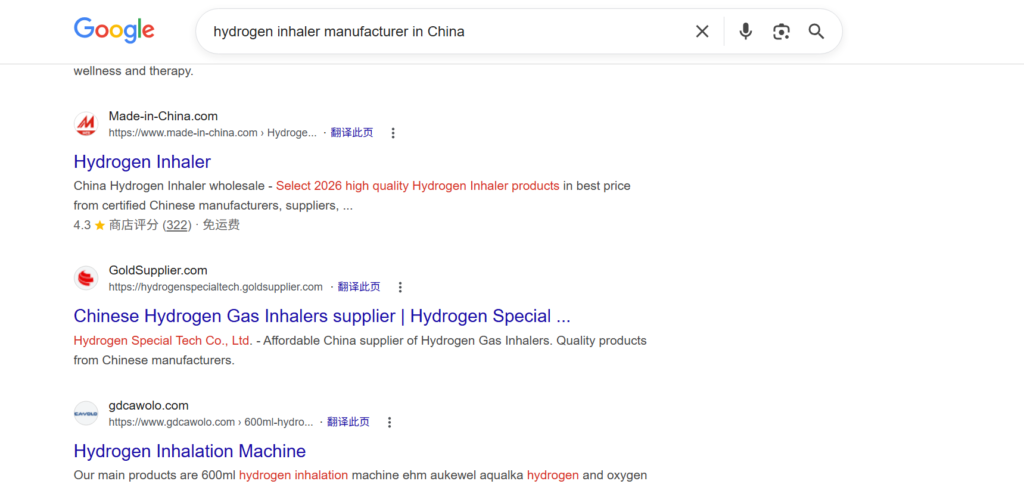
Google is useful for identifying companies with independent websites, product pages, technical information, and visible branding. In many cases, suppliers that invest in their own website and product presentation appear more serious than those relying only on marketplace listings.
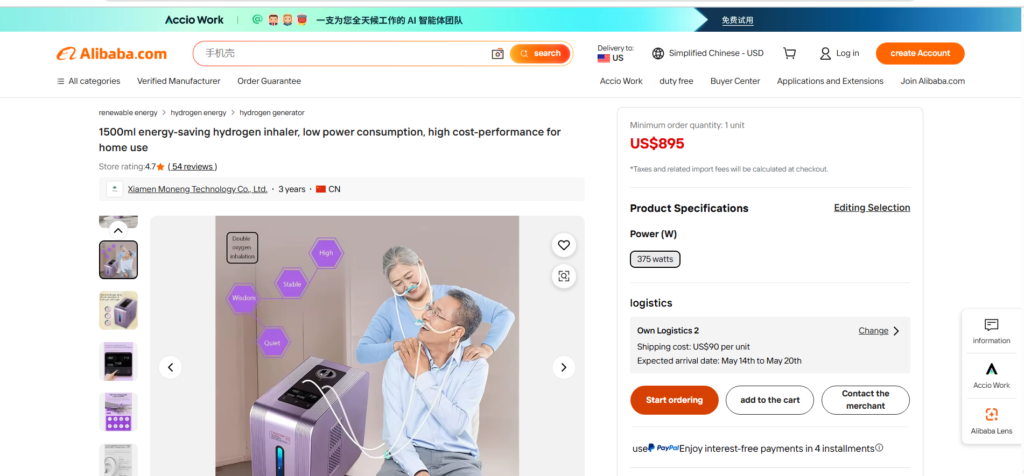
Alibaba is useful for supplier discovery, price benchmarking, and comparing product ranges, minimum order quantities, and response speed. However, it should be treated as a starting point rather than a complete due diligence process.
Trade shows remain valuable because they allow buyers to compare products directly, assess presentation quality, and ask technical questions in person. This is especially useful in categories related to health technology and medical-adjacent products.
2. Narrow the supplier list quickly
After identifying initial candidates, buyers should reduce the list using a short screening process. Useful questions include:

- How many years have you been manufacturing hydrogen-related products?
- Are you a factory or a trading company?
- What product categories do you specialize in?
- Can you provide detailed product specifications?
- What quality documents or test reports can you provide?
- Can you support OEM or private label projects?
- What is your standard production lead time?
- What export markets do you currently serve?
The purpose of this stage is speed and clarity. Strong suppliers usually answer directly and provide structured information. Weak suppliers often respond vaguely, avoid technical details, or fail to address compliance questions clearly.
3. Evaluate product quality, not just pricing
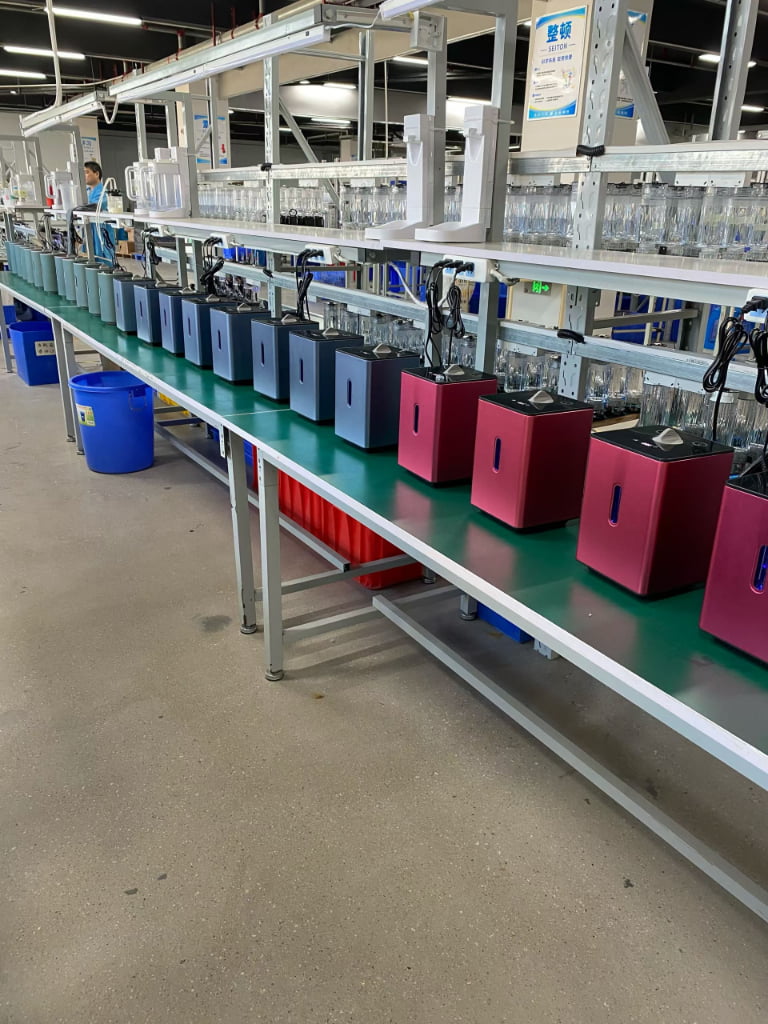
A hydrogen inhaler should be evaluated as a functional product, not only as a commercial item.
Key evaluation points include:
- Hydrogen concentration output
- Gas flow stability
- Core component quality
- Materials used in contact areas and structural parts
- Noise level and thermal stability
- Cleaning and maintenance requirements
- Service life expectations
- Packaging quality
- User manual quality and labeling clarity
- After-sales support and spare parts availability
Buyers should request samples and compare more than one unit when possible. A single acceptable sample does not always reflect production consistency.
The goal is not simply to confirm that the product works once. The goal is to understand whether the supplier can deliver repeatable quality across batches.
4. Review compliance positioning carefully
This is one of the most important parts of the sourcing process.
Hydrogen inhalers may fall into different regulatory situations depending on how they are marketed, what claims are made, and which market they are intended for. A product described in general wellness terms may be treated very differently from a product marketed with disease-treatment or medical-use claims.
For this reason, buyers should not stop at asking whether a supplier has “certificates.” They should ask more specific questions, such as:
- Which market is this version intended for?
- How is the product described in brochures, manuals, and packaging?
- Is it positioned as a wellness product or a medical device?
- What testing, quality, or compliance documents support that positioning?
- Can the claims and labeling be adjusted for different markets?
This distinction matters because the same hardware may create very different regulatory exposure depending on its intended use and marketing language.
5. Confirm the supplier can scale with your business
A good sample supplier is not always a good long-term manufacturing partner.
Before moving forward, buyers should confirm whether the supplier can support:
- Stable mass production
- Consistent quality control
- Private label or OEM packaging
- Branding customization
- Spare parts supply
- Warranty handling
- Repeat orders without major specification drift
- Technical support after shipment
For brand owners and distributors, this is critical. The real test of a supplier is not whether they can ship one sample order, but whether they can support consistent business over time.
Where to Find Hydrogen Inhaler Suppliers in China
Google is often useful for finding manufacturers with stronger branding, better product documentation, and more complete company information. It also helps buyers compare how different suppliers position themselves: some may focus on consumer wellness, others on OEM production, and others on distribution partnerships.
This positioning context is useful before first contact.
Alibaba
Alibaba is efficient for initial supplier discovery. Buyers can use it to compare quotations, response speed, product variety, and stated export experience.
However, marketplace visibility should not be confused with full supplier qualification. Listings can help create a shortlist, but real evaluation should be done through direct communication, sample review, documentation checks, and factory-level due diligence where necessary.
Trade shows
Trade shows remain one of the best ways to evaluate suppliers more efficiently. In-person meetings make it easier to compare product build quality, assess communication ability, and ask detailed technical questions.
For buyers who are serious about building a long-term supply relationship, trade shows can significantly shorten the screening process.
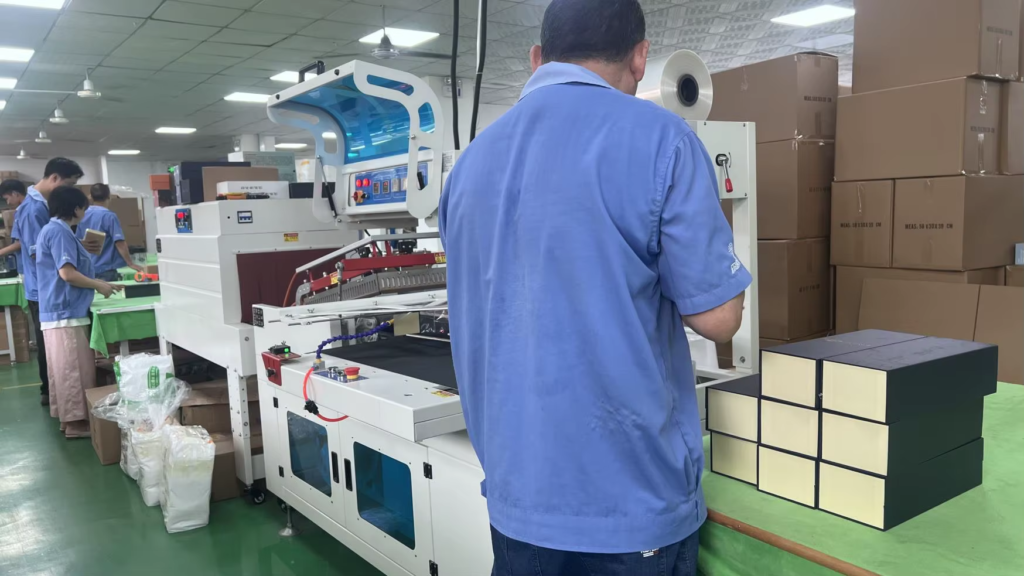
How to Identify a Strong Supplier
A strong hydrogen inhaler supplier usually shows several characteristics.
1. They understand their own product clearly
When asked about hydrogen output, maintenance, materials, packaging, application scenarios, or customization, they provide direct and technically consistent answers.
2. They understand export-market differences
A qualified supplier should understand that product positioning, labeling, documentation, and claims may need to vary by market. They do not assume that one version is suitable for every country or sales channel.
3. They communicate clearly
Professional communication is a strong signal. Good suppliers provide complete answers, organized documents, and realistic expectations. They do not simply agree to every request without clarification.
4. They show specialization
A broader product line within hydrogen-related categories can be a positive signal. A company that has focused on hydrogen wellness or adjacent categories for several years may be more capable than one offering the product opportunistically with little technical depth.
Specialization alone is not proof of quality, but it can indicate stronger product familiarity and more stable manufacturing capability.
Common Sourcing Mistakes
Choosing only on price
Low pricing can create downstream problems in product stability, packaging quality, documentation, and customer satisfaction. The cheapest unit price is not always the lowest total cost.
Treating compliance as an afterthought
Claims, labeling, manuals, and intended-use language can create regulatory problems later, especially if the product is marketed with medical implications.
Testing samples too casually
Samples should be reviewed systematically. Buyers should check appearance, performance consistency, packaging, manuals, accessories, and unit-to-unit variation.
Thinking only about the first order
A supplier should be evaluated not only for sample delivery, but for repeatability, communication, support, and scale.
Recommended Due Diligence Checklist
Before placing a formal order, buyers should ideally confirm:
- Supplier identity and business registration
- Whether the company is a manufacturer or trading company
- Years of relevant manufacturing experience
- Product specifications and technical parameters
- Sample quality and consistency across units
- Quality control process before shipment
- Available test reports or supporting documentation
- Packaging and labeling capability
- OEM/private label support
- Lead time and production capacity
- Warranty and after-sales process
- Spare parts availability
- Export experience in the intended market
This checklist helps move the sourcing decision from opinion-based to evidence-based.
Final Thoughts
Sourcing hydrogen inhalers from China is straightforward at the discovery stage. The real challenge is selecting a supplier that can support product quality, documentation, communication, and long-term business needs.
The most effective buyers do not ask only, “Who has the lowest price?” They ask, “Who can consistently support a stable product and a scalable business?”
That shift in mindset usually leads to better supplier decisions, fewer sourcing problems, and a stronger foundation for long-term growth.